

By Precious Paul and Glory Solomon | January 25th 2026
Introduction
In January 2025, Emrich Effanga, a 32-year-old hairstylist from Uyo, Nigeria, was strangled to death by her boyfriend, a church usher. Her tragic death is part of a disturbing pattern of gender-based killings that continue to claim women’s lives across the country.
This crisis is not an isolated incidents but reflects a deeper societal problem: femicide. Recognised by the United Nations (UN) and the Office of the High Commissioner for Human Rights (OHCHR), femicide is the intentional killing of women and girls because of their gender, often perpetrated by intimate partners, family members, or others motivated by misogyny, ‘honour’ codes, or a desire to control women.
While femicide is a global crisis, Nigeria stands out for its escalating rates, reflecting entrenched gender inequality, systemic impunity, and harmful social and cultural norms. Each femicide case is not only a personal tragedy but a national failure, highlighting gaps in legal protections, enforcement, and public accountability. Everyday women are taught strategies to survive, how to share their location, be cautious with men, or remain silent, underscoring a society that has long prioritised adaptation over mitigation.
Understanding Femicide
Unlike general homicide, which includes killings regardless of gender, femicide specifically targets women because of their gender. Recognising this distinction is essential to understanding its social, cultural, and legal dimensions and achieving justice for victims and families. Women account for 58% of homicide victims in intimate-partner contexts (UNODC, 2023), and roughly 137 are killed every day by family members (UN Women, 2023). These statistics show that femicide is systematically rooted in gender inequality and discrimination.
Femicide in Nigeria
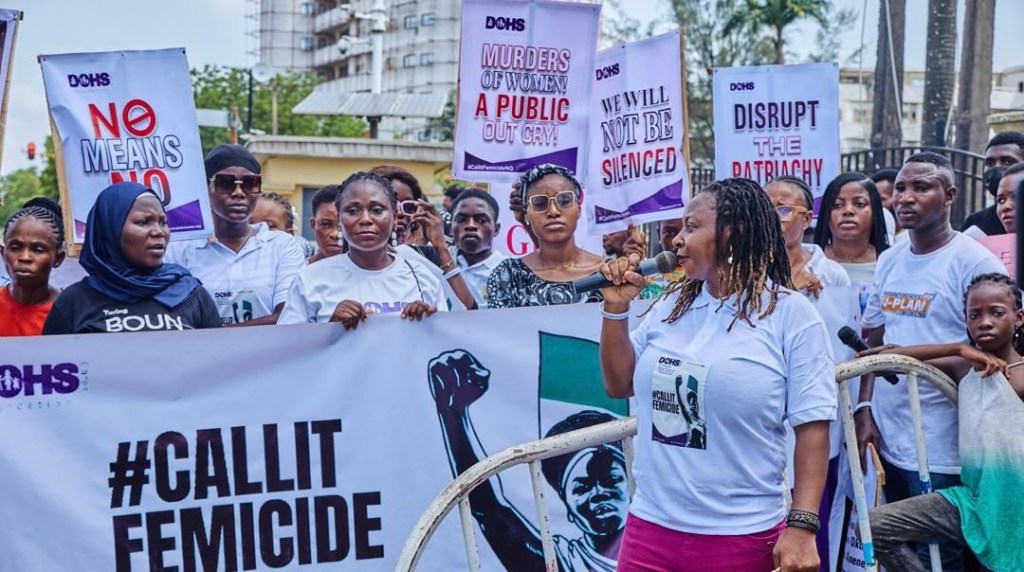
The “DOHS Cares Foundation” recorded 133 documented femicide cases in 2024, each verified through media and police reports. As of 14th September 2025, Deborah Moses became the 140th reported victim. Similarly “DocumentWomen” compiles monthly lists of women killed by intimate partners or acquaintances. Urban states like Lagos dominate reporting due to stronger media presence, while killings in rural northern communities remain underreported.
Notable cases include:
- Uwaila Omozuwa was a first-year student who was raped and assaulted inside a Church premise, in Edo state May 2020. She was found lying half naked in a pool of her blood, further investigation showed she was raped, but the police called it “inhumane sexual assault”.
- Ochanya Elizabeth Ogbanje was a 13 year old girl who died after being abused by a father and his son for five years while living with them as guardians, she died of Vesico Vaginal fistula (VVF), ONLY her aunt was convicted of negligence for failing to protect Ochanya from constant abuse, but the perpetrators have been walking freely. In October 2025, 7 years after her death, Nigerians have reignited the #Justiceforochanya movement even with a fraction not having faith in the system.
- Oluwabamise “Bamise” Toyosi Ayanwole, 22 years old, was abducted on 26 February 2022 after boarding a BRT bus in Lagos. Her body was discovered nine days later near Carter Bridge, Lagos Island. The case remains unresolved, with conflicting reports about mutilation and no publicly confirmed convictions.
- Success Izekor, a pregnant woman stabbed by her husband, Hanifa Abubakar, a 5 years old child killed by her school proprietor, Glory Adekulore, Habibat Akinsaya. These names represent only those fortunate enough to enter the national conscience, countless others remain buried in unrecorded files or family silence.
Legal and Institutional Gaps
Based on existing legal and institutional framework, Nigeria’s legal system protects life and dignity but lacks any law directly addressing femicide. The 1999 Constitution guarantees the right to life (Section 33) and dignity (Section 34) but provides no gender-specific safeguards. The Criminal Code (southern Nigeria) and Penal Code (northern states) criminalise murder and assault but omit femicide as a distinct offence. Section 55 of the Penal Code permits a husband to “correct” his wife under customary law, reflecting tolerance for gender-based violence.
The Violence Against Persons (Prohibition) Act 2015 (VAPP Act) prohibits offences such as rape and spousal battery but does not explicitly address femicide. Its enforcement is limited to the Federal Capital Territory and states that have domesticated it. Institutional weaknesses, including poor implementation, weak prosecution, and cultural acceptance, continue to undermine protection.
Although Nigeria has ratified key international treaties, including the Universal Declaration of Human Rights, the International Covenant on Civil and Political Rights (ICCPR), CEDAW, the Convention Against Torture, and the Maputo Protocol, Section 12 of the Constitution restricts their domestic effect unless enacted by the National Assembly, creating a significant implementation gap.
Civil Society and Community Responses
With weak legal enforcement, Nigerian communities and civil society are frontline defenders against femicide. Campaigns like #JusticeforOchanya and #StopFemicideNG document cases, amplify survivors’ voices, and pressure authorities to act.
Grassroots movements support families and survivors through counselling, shelter, and legal guidance, while youth groups run awareness workshops and school programmes to challenge harmful gender norms.
First-hand testimonies highlight both the human cost of impunity and the power of collective action, showing that community solidarity is crucial for survival, advocacy, and eventual change.
Femicide persists due to societal neglect, embedded inequality, and the failure to uphold justice. Addressing this crisis requires education, legal enforcement, awareness, and global solidarity, both within Nigeria and across the world.
Conclusion
Everyone has a role to play: from supporting survivors and documenting abuses, to holding perpetrators and authorities accountable. Governments, international organisations, civil society, and individuals worldwide must unite to challenge harmful gender norms, promote justice, and protect women and girls everywhere.
The time to act is now: we must turn grief and outrage into action, demanding justice, safeguarding women and girls, and building a world where they can live free from fear, violence, and oppression everywhere.
 Global Rights Alliance
Leave a comment